Thermal Insulation
Scale crust insulates heat exchanger metal, requiring higher burner firing to heat water.
Descaling & Flushing
Regularly descaling a tankless water heater dissolves hard water calcium deposits, restoring full heat exchanger efficiency and preventing thermal burnout.
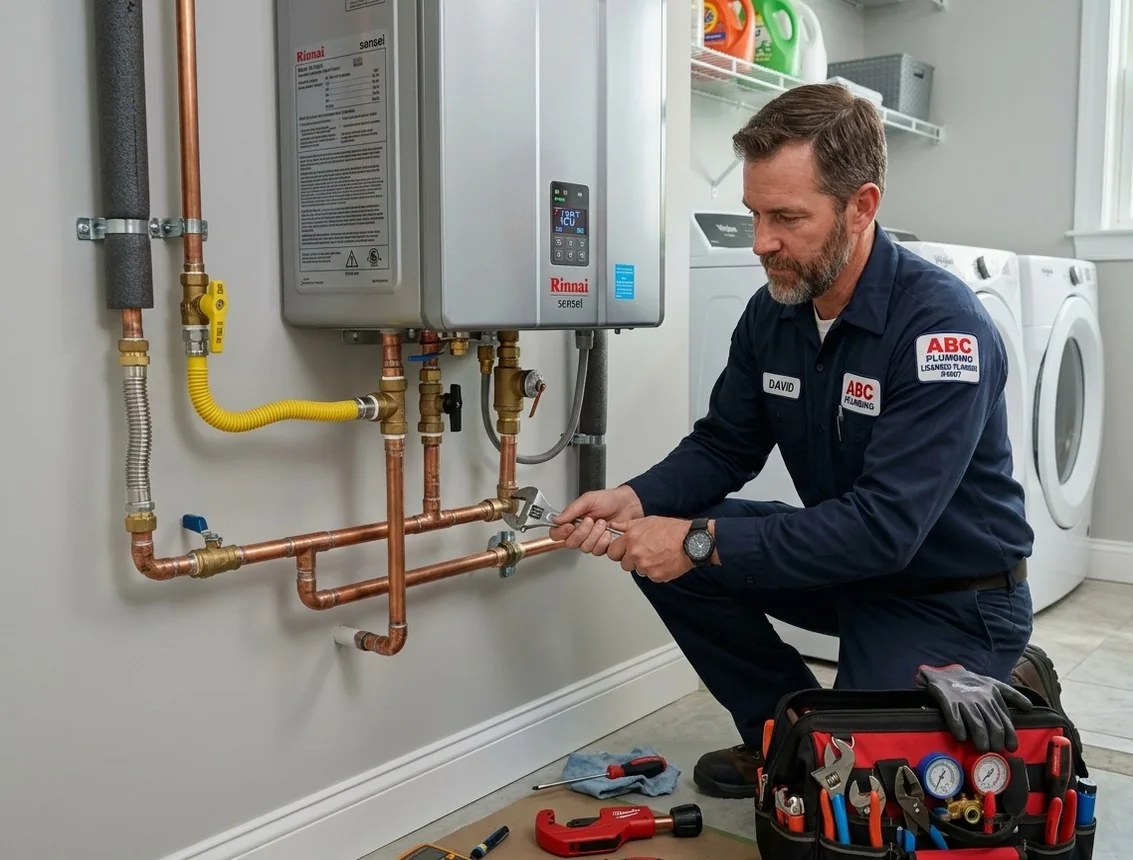
Descaling (flushing) involves circulating a non-toxic descaling solution through the internal heat exchanger using isolation valves and a submersible pump. The solution dissolves calcium carbonate and mineral scale crust from copper or stainless steel tube walls.
When hard water is heated inside narrow tankless heat exchanger tubes, dissolved minerals like calcium and magnesium precipitate out of solution, coating metal walls with a rock-hard scale crust.
Because scale acts as thermal insulation, it reduces heat transfer efficiency, forces burners to consume more fuel, restricts water flow, and eventually causes metal heat exchangers to crack from localized overheating.
Scale crust insulates heat exchanger metal, requiring higher burner firing to heat water.
Thick scale deposits narrow internal tube diameter, reducing GPM water flow.
Heat trapped behind scale crust causes metal stress cracking and heat exchanger failure.
Scale coating thermistors causes inaccurate temperature readings and system errors.
Using a 1/6 HP pump to circulate 3 to 4 gallons of food-grade virgin descaling solution through heat exchanger tubes.
Connecting washer hoses directly to cold and hot isolation valve service ports for sealed flushing.
Removing and rinsing cold water inlet sediment screen after completing the flushing process.
Flushing heat exchanger with fresh tap water for 5 minutes after descaling to clear residual solution.
Turn off gas/electric power, close cold/hot main isolation valves, and attach pump hoses to service ports.
Submerge pump in descaling bucket, open service valves, and circulate solution for 45 to 60 minutes.
Close cold service valve, open main cold supply valve, and flush fresh water through hot service port to drain.
Remove and rinse cold water filter screen, close service ports, open hot main valve, and restore power.
Tankless systems from major manufacturers can differ in components, diagnostics, maintenance procedures, and error-code definitions. Service resources cover major brands found in service areas across the country.
Explore more tankless water heater services from TanklessFixer across specialized system categories.
Explore resources, causes, and options for tankless water heater maintenance.
Learn More →Explore resources, causes, and options for tankless water heater heat exchanger repair.
Learn More →Explore resources, causes, and options for tankless water heater no hot water.
Learn More →Explore resources, causes, and options for tankless water heater installation.
Learn More →Food-grade white vinegar can be used, but professional non-toxic descaling solutions (like Haymaker or Flow-Aide) dissolve scale significantly faster.
Circulating the descaling solution takes 45 to 60 minutes. The entire process, including setup and purging, takes about 75 to 90 minutes.
Descaling is recommended once every 12 months for average water hardness, or every 6 months in areas with severe hard water (>12 grains per gallon).
No, routine descaling is actually required by manufacturers to maintain warranty protection on heat exchangers.
Unflushed scale eventually causes heat exchanger tube cracking, reduced flow, high gas bills, and permanent unit failure.
TanklessFixer organizes tankless water heater services by state and city so homeowners can quickly find local repair, maintenance, installation, and replacement information. Search or select a state below to find local city coverage.
Connect with local service resources for repair, troubleshooting, maintenance, installation, and replacement across state and city service areas.
Call (833) 643-1120