Mineral Scale Crust
Calcium carbonate buildup insulates metal walls, causing localized thermal overheating.
Heat Exchanger Service
The heat exchanger is the heart of a tankless water heater, transferring intense gas flame heat or electrical energy directly to incoming cold water.
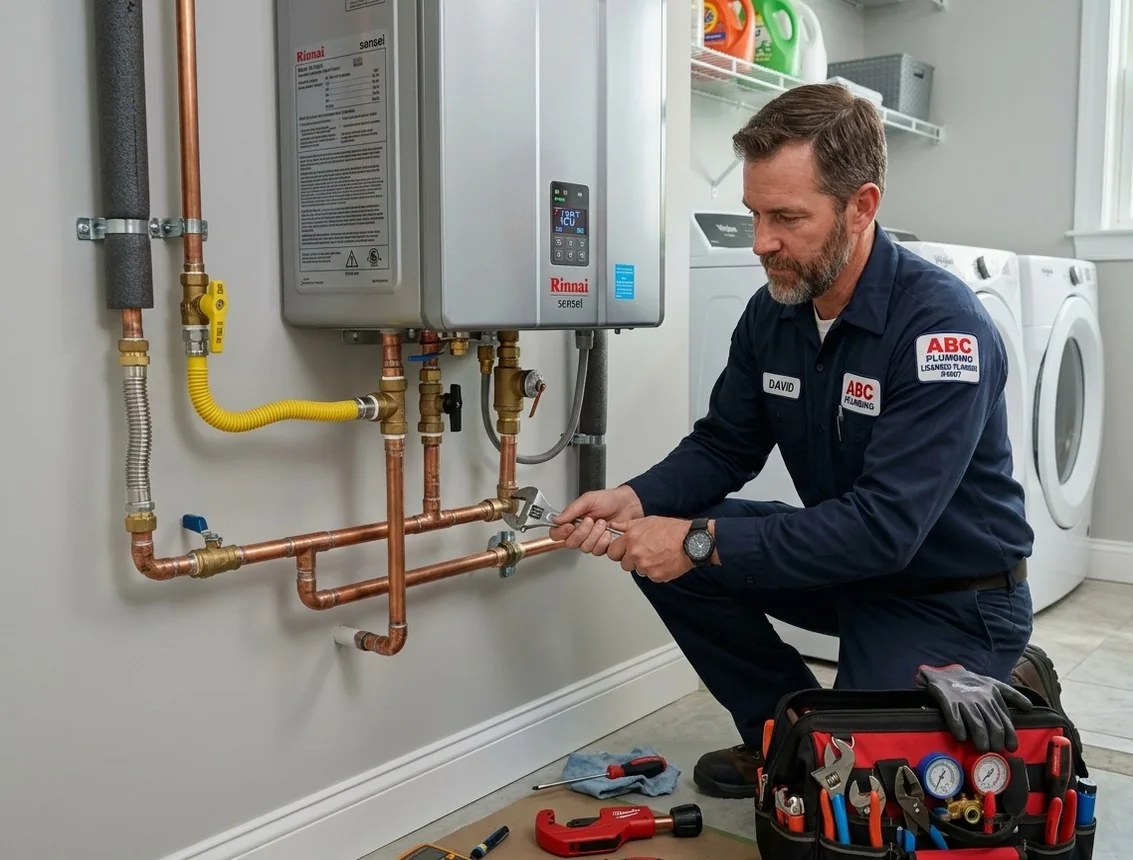
Heat exchanger failure is primarily caused by unmanaged mineral scale buildup that insulates metal tubing and leads to thermal stress cracking, severe condensation corrosion, winter freeze damage, or continuous operation at extreme water temperatures.
Made from heavy-gauge copper or high-grade stainless steel, tankless heat exchangers are designed for rapid heat transfer. Water flows through small finned tubes directly exposed to burner combustion gases or electric heating chambers.
When hard water minerals coat internal tube walls, heat cannot escape into the water. The metal overheats, expands unevenly, and eventually develops pinhole leaks or structural cracks.
Calcium carbonate buildup insulates metal walls, causing localized thermal overheating.
Condensing units with clogged drains expose metal fins to corrosive flue liquid.
Water left inside heat exchanger tubes during freezing weather expands and splits metal.
Operating with restricted water flow causes extreme temperature spikes inside tubes.
Thick scale crust prevents water from cooling tube walls, leading to metal fatigue and stress cracks.
Corrosion pinholes spray water into combustion chambers, shorting igniters and shutting down burners.
Soot or scale debris between exterior fins restricts airflow and triggers high-temperature errors.
Understanding material specs helps determine correct descaling frequency and chemical compatibility.
If the heat exchanger is intact but scale-clogged, circulating descaling solution restores heat transfer.
Clearing exterior soot and debris from air fins improves combustion airflow efficiency.
Performing hydrostatic pressure tests confirms whether tube walls are cracked or watertight.
If major structural cracks or leaks exist, replacing the heat exchanger assembly or entire unit is required.
Tankless systems from major manufacturers can differ in components, diagnostics, maintenance procedures, and error-code definitions. Service resources cover major brands found in service areas across the country.
Explore more tankless water heater services from TanklessFixer across specialized system categories.
Explore resources, causes, and options for tankless water heater descaling & flushing.
Learn More →Explore resources, causes, and options for tankless water heater leak repair.
Learn More →Explore resources, causes, and options for tankless water heater freeze damage repair.
Learn More →Explore resources, causes, and options for tankless water heater replacement.
Learn More →Due to high operating pressures and extreme thermal expansion, cracked heat exchangers cannot be welded reliably and must be replaced.
Common indicators include reduced hot water pressure, rumbling sounds, and thermal high-limit error codes during use.
Stainless steel resists scale buildup and acidic condensate corrosion better, while copper offers higher initial heat conductivity.
Scale acts as thermal insulation. Because heat cannot transfer into the water, the metal tube overheats and develops cracks.
Most manufacturers offer 5 to 15 year warranties on heat exchangers, provided recommended annual maintenance has been performed.
TanklessFixer organizes tankless water heater services by state and city so homeowners can quickly find local repair, maintenance, installation, and replacement information. Search or select a state below to find local city coverage.
Connect with local service resources for repair, troubleshooting, maintenance, installation, and replacement across state and city service areas.
Call (833) 643-1120