Exterior Intake Blockage
Leaves, snow, or insect nests blocking intake pipe screens restrict fresh combustion air.
Combustion Venting Repair
Gas tankless water heaters require specialized direct-vent intake and exhaust systems to supply fresh combustion air and expel flue gases safely outside.
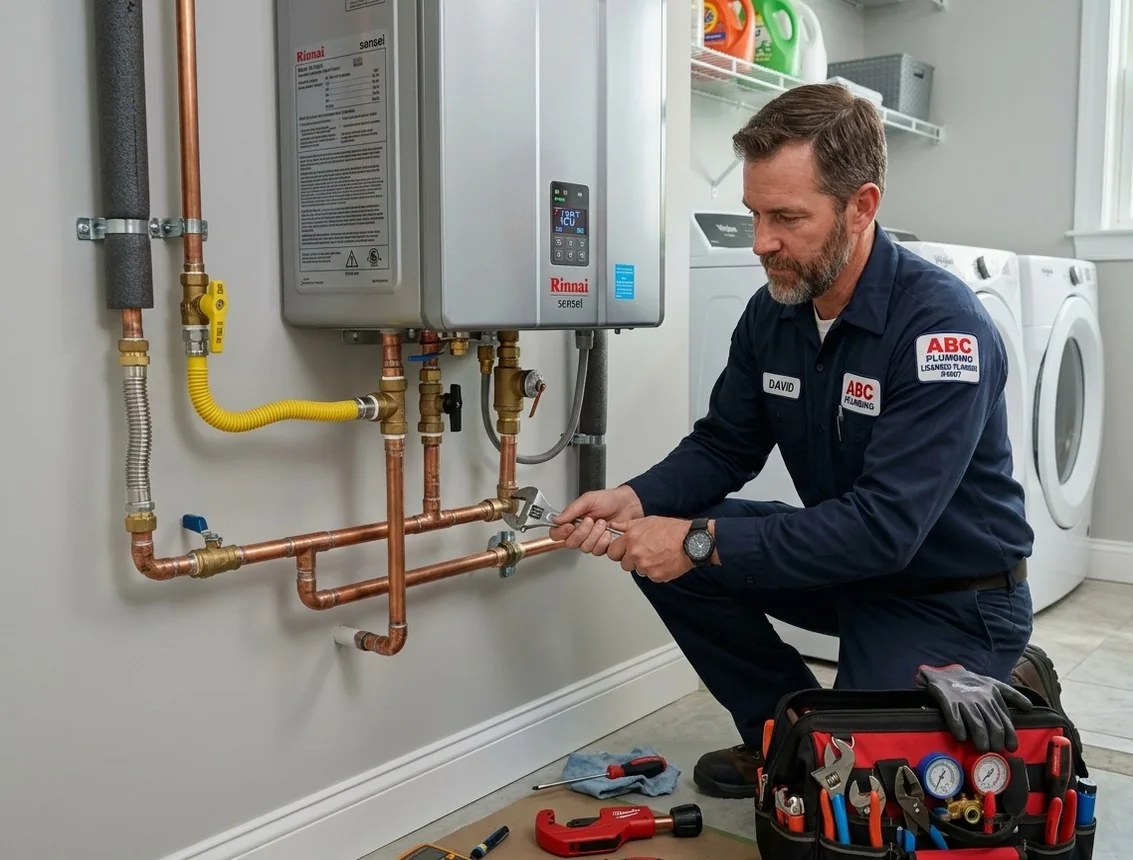
Gas tankless water heaters burn fuel at high rates (up to 199,000 BTUs). Safe operation requires sealed Category III stainless steel or PVC/CPVC/PP venting to intake fresh outdoor air and exhaust carbon monoxide and water vapor flue gases safely outside the home.
Unlike atmospheric tank water heaters that vent naturally through metal chimneys, gas tankless units use power-blower fans to push exhaust gases horizontally or vertically through sealed pipes.
If vent pipes become obstructed by bird nests, snow, or insect screens, or if vent joints separate, safety sensors trigger combustion lockouts to prevent dangerous carbon monoxide buildup.
Leaves, snow, or insect nests blocking intake pipe screens restrict fresh combustion air.
Using standard DWV PVC instead of approved Schedule 40 PVC, CPVC, or polypropylene.
Worn blower fan bearings or dust-clogged impellers fail to maintain required air velocity.
Acidic flue condensate backing up into the exhaust collar triggers safety flood switches.
Pipes-within-pipes that draw fresh air through outer channels while exhausting flue gas through inner pipes.
Corrosion-resistant sealed stainless steel piping required for non-condensing gas tankless units.
Plastic venting allowed on high-efficiency condensing units due to lower exhaust flue gas temperatures.
Variable-speed fan motors that adjust airflow dynamically to match gas burner modulation.
Check exterior intake and exhaust vent caps for snow, ice, insect screens, or debris.
Inspect vent joints inside home for airtight seals, proper slope, and support hangers.
Remove intake blower fan housing and vacuum dust from fan blades and air intake screens.
Test differential air pressure switches to ensure fan creates required draft before ignition.
Tankless systems from major manufacturers can differ in components, diagnostics, maintenance procedures, and error-code definitions. Service resources cover major brands found in service areas across the country.
Explore more tankless water heater services from TanklessFixer across specialized system categories.
Explore resources, causes, and options for gas tankless water heater repair.
Learn More →Explore resources, causes, and options for tankless water heater gas valve & burner repair.
Learn More →Explore resources, causes, and options for tankless water heater error codes.
Learn More →Explore resources, causes, and options for tankless water heater installation.
Learn More →No, gas tankless units require sealed forced-draft Category III stainless steel or approved plastic venting due to positive vent pressure and acidic condensation.
Code 90 indicates combustion airflow abnormality, typically caused by blocked intake/exhaust pipes, loose vent joints, or fan speed issues.
High-efficiency condensing units produce acidic water vapor condensation in exhaust pipes. Vent pipes must slope back to a condensate drain trap.
Building codes generally require vent terminations to be at least 12 inches away from operable windows, doors, or building openings.
Direct vent draws fresh combustion air directly from outdoors through a pipe, whereas non-direct vent draws combustion air from inside the room.
TanklessFixer organizes tankless water heater services by state and city so homeowners can quickly find local repair, maintenance, installation, and replacement information. Search or select a state below to find local city coverage.
Connect with local service resources for repair, troubleshooting, maintenance, installation, and replacement across state and city service areas.
Call (833) 643-1120