Heat Exchanger Leaks
Cracks caused by hard water scale stress or winter freezing allow water into the burner chamber.
Tankless Leak Repair
Water leaks in tankless systems must be promptly diagnosed and repaired to prevent electrical short circuits, cabinet corrosion, and property damage.
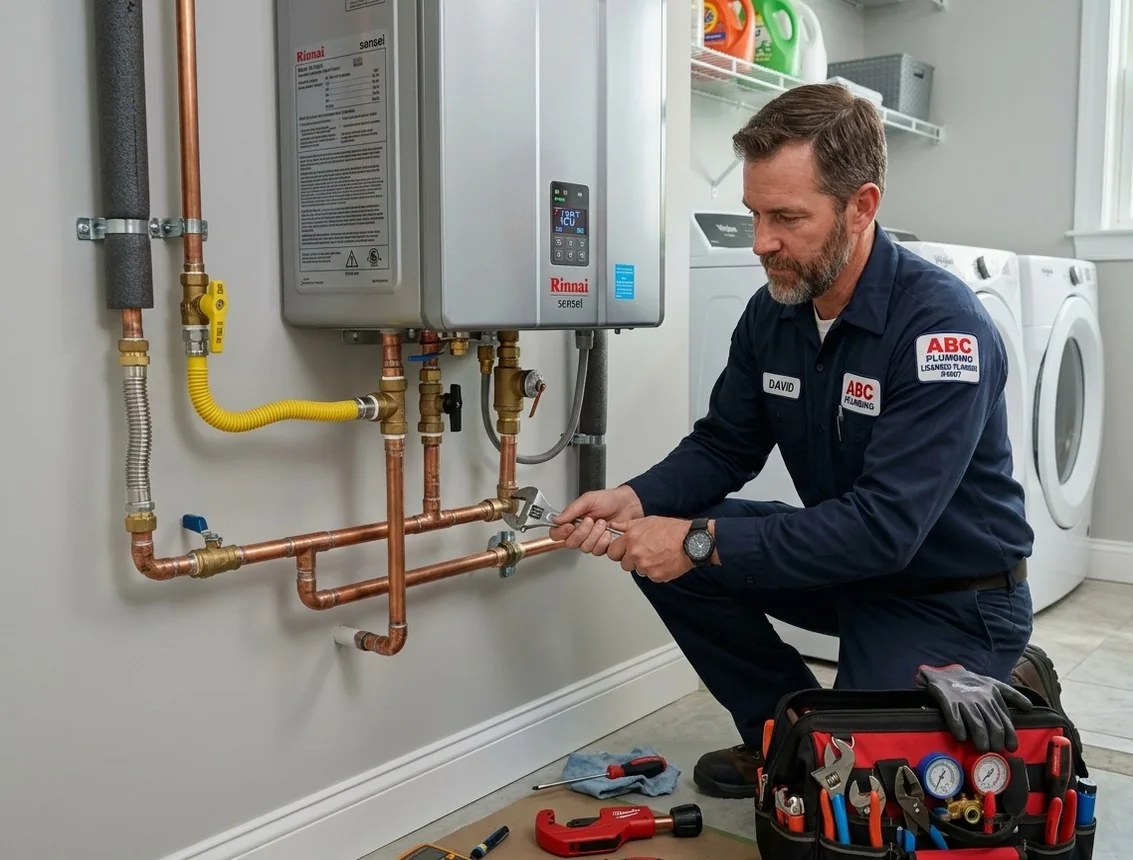
A tankless water heater leak can originate from loose water pipe connections, worn isolation valve O-rings, a leaking pressure relief valve, cracked heat exchanger tubing due to freezing or scale corrosion, or blocked condensate drain lines in condensing models.
Because tankless water heaters contain high-voltage wiring, delicate control boards, and gas burners inside a compact cabinet, internal water leaks pose serious operational risks.
Identifying the leak source—whether external plumbing connections, internal O-ring seals, pressure relief valves, or heat exchanger welds—determines whether component seal replacement or complete unit repair is needed.
Cracks caused by hard water scale stress or winter freezing allow water into the burner chamber.
Dripping caused by thermal expansion, high incoming water pressure, or valve seat debris.
Rubber O-rings on flow sensors, bypass valves, or heat exchanger connections degrade over time.
Clogged or unprimed condensate traps cause acidic water to back up and overflow into the cabinet.
Degraded rubber gaskets on cold and hot water connection unions can weep water down supply pipes.
Corrosion or freeze damage in copper heat exchanger tubes leads to internal water leaks during firing.
High water pressure or thermal expansion forces the safety relief valve to open and discharge water.
Acidic condensate from high-efficiency gas units can leak into the cabinet if drain lines freeze or clog.
Turn off electrical breakers, close gas shutoff valves, and close cold water supply valves.
Remove front cabinet cover and dry internal components to locate the precise origin of water.
Replace leaking O-rings, faulty flow sensors, damaged pressure relief valves, or fittings.
Reopen water supply, check for watertight integrity, and restore electrical power.
Tankless systems from major manufacturers can differ in components, diagnostics, maintenance procedures, and error-code definitions. Service resources cover major brands found in service areas across the country.
Explore more tankless water heater services from TanklessFixer across specialized system categories.
Explore resources, causes, and options for tankless water heater heat exchanger repair.
Learn More →Explore resources, causes, and options for tankless water heater pressure relief valve repair.
Learn More →Explore resources, causes, and options for tankless water heater freeze damage repair.
Learn More →Explore resources, causes, and options for tankless water heater replacement.
Learn More →Yes, leaks from O-rings, isolation valves, pressure relief valves, or condensate lines are easily repairable. Heat exchanger leaks may require unit replacement.
Yes, internal leaks can drip onto high-voltage transformers, igniter boards, or wiring, causing short circuits or electrical damage.
Water dripping from the cabinet bottom usually indicates a leaking internal pipe connection, degraded O-ring seal, or cracked heat exchanger.
A pressure relief valve drips when household water pressure exceeds 150 PSI, thermal expansion occurs, or mineral scale prevents the valve from seating fully.
Turn off the cold water inlet valve to stop water flow, turn off electrical power to the unit, and contact a qualified technician.
TanklessFixer organizes tankless water heater services by state and city so homeowners can quickly find local repair, maintenance, installation, and replacement information. Search or select a state below to find local city coverage.
Connect with local service resources for repair, troubleshooting, maintenance, installation, and replacement across state and city service areas.
Call (833) 643-1120