Descaling & Flushing
Circulating food-grade descaling solution clears calcium buildup from heat exchanger walls.
Tankless Maintenance
Routine preventative maintenance protects internal heat exchangers, preserves fuel efficiency, and prevents sudden component breakdowns in gas and electric tankless systems.
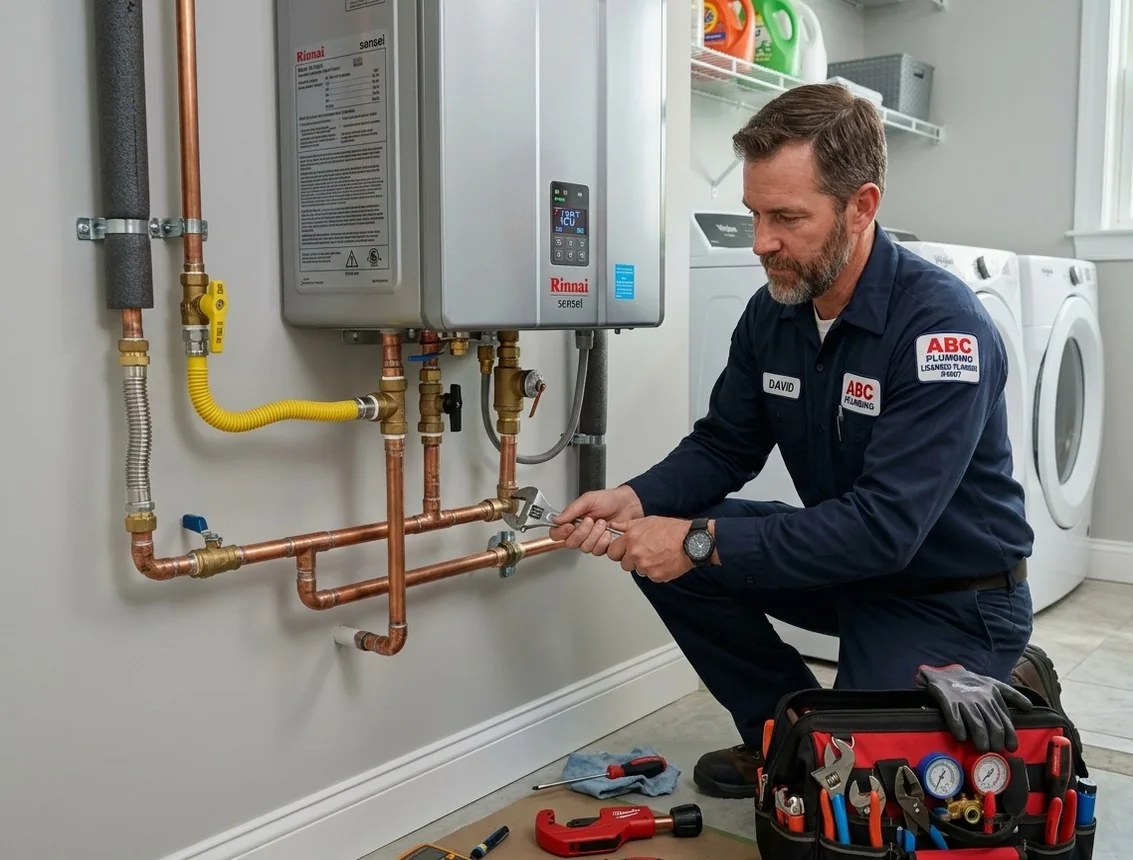
Tankless water heater maintenance typically includes descaling the copper heat exchanger to clear mineral deposits, rinsing the cold water inlet filter, inspecting igniters and flame sensors, checking venting terminals for obstructions, and testing safety pressure relief valves.
Unlike traditional storage tanks, on-demand tankless water heaters contain high-tech electronic controls, micro-channel copper or stainless heat exchangers, and sensitive flow sensors. Routine servicing keeps these precision parts operating at peak performance.
Hard water minerals are the leading threat to tankless longevity. Annual descaling dissolves scale crust before it causes thermal insulation, localized overheating, or heat exchanger failure.
Circulating food-grade descaling solution clears calcium buildup from heat exchanger walls.
Rinsing the cold water inlet mesh screen removes pipe debris, sediment, and rust particles.
Cleaning carbon deposits from gas igniters ensures rapid burner ignition and flame stability.
Checking intake screens and blower fans ensures proper airflow and combustion safety.
Flushing mineral deposits preserves heat transfer efficiency and prevents expensive heat exchanger burn-through.
Clearing sediment buildup from the inlet filter maintains rated GPM flow to activation sensors.
Checking thermistors, wiring harnesses, and gas valves catches minor wear before it causes system shutdowns.
Testing pressure relief valves and freeze protection heaters ensures reliable home protection.
Connect a flushing pump to isolation valves and circulate descaling solution for 45-60 minutes.
Shut off inlet water, remove the cold water filter screen, and rinse away accumulated debris.
Inspect gas burner flame pattern, clean igniter pins, and clear air intake screens.
Test system under full fixture load to confirm stable temperature and diagnostic compliance.
Tankless systems from major manufacturers can differ in components, diagnostics, maintenance procedures, and error-code definitions. Service resources cover major brands found in service areas across the country.
Explore more tankless water heater services from TanklessFixer across specialized system categories.
Explore resources, causes, and options for tankless water heater descaling & flushing.
Learn More →Explore resources, causes, and options for tankless water heater no hot water.
Learn More →Explore resources, causes, and options for tankless water heater thermostat & sensor repair.
Learn More →Explore resources, causes, and options for tankless water heater freeze damage repair.
Learn More →Explore resources, causes, and options for tankless water heater error codes.
Learn More →Most manufacturers recommend complete maintenance including descaling at least once every 12 months, or more frequently in hard water regions.
Neglecting maintenance leads to mineral scale buildup, reduced hot water flow, sensor errors, higher energy bills, and eventual heat exchanger failure.
Yes, closing the inlet isolation valve, unscrewing the filter cap, and rinsing sediment from the wire mesh screen is a standard procedure.
Yes, hard water accelerates mineral scale accumulation inside the heat exchanger, requiring more frequent annual or biannual flushing.
Many tankless manufacturers require documented annual maintenance to validate warranty claims on heat exchangers and major internal components.
TanklessFixer organizes tankless water heater services by state and city so homeowners can quickly find local repair, maintenance, installation, and replacement information. Search or select a state below to find local city coverage.
Connect with local service resources for repair, troubleshooting, maintenance, installation, and replacement across state and city service areas.
Call (833) 643-1120