Gas & Electrical Supply
Gas units require adequate gas line pressure; electric models need dedicated 240V circuits.
Tankless Installation
Proper installation of gas or electric tankless water heaters ensures optimal flow rates, energy efficiency, safe combustion venting, and long system life.
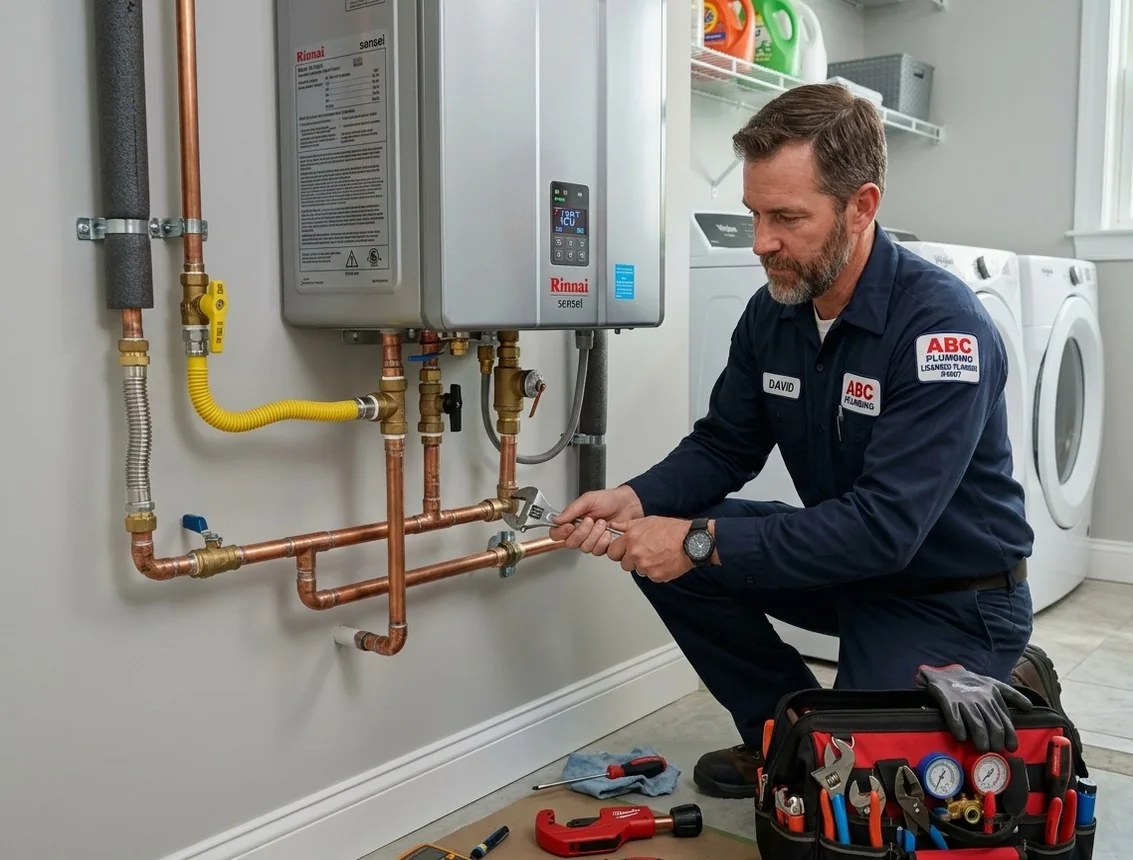
Tankless water heater installation involves mounting the unit, running dedicated gas lines or high-amperage electrical wiring, installing intake and exhaust venting, connecting cold and hot water supply pipes with isolation valves, and calibrating system flow sensors.
Switching to an on-demand tankless system provides continuous hot water while eliminating the energy losses of traditional storage tanks. Proper installation requires careful calculation of household peak gallons-per-minute (GPM) demand and incoming groundwater temperatures.
Gas tankless installations require verifying BTU gas supply line capacity and code-compliant exhaust venting. Electric installations demand sufficient main breaker panel amperage and dedicated circuit wiring.
Gas units require adequate gas line pressure; electric models need dedicated 240V circuits.
Dedicated Category III stainless steel or PVC/CPVC exhaust ducting is critical for safe operation.
Installing service isolation valve kits allows easy annual descaling and filter maintenance.
Connecting ¾-inch water supply lines ensures unrestricted flow to the heat exchanger.
Accurately matching unit GPM ratings to fixture usage prevents temperature drops during simultaneous water use.
Installing proper concentric or twin-pipe venting delivers fresh combustion air and exhausts flue gases safely.
Ensuring correct gas line pipe diameter guarantees the unit receives required peak BTU gas pressure.
Equipping every installation with webstone isolation valves facilitates future flushing and routine service.
Selecting a wall location with proper clearances and securing heavy-duty mounting brackets.
Routing gas lines or electrical supply cables according to equipment specifications.
Connecting water supply lines with isolation valves, pressure relief valves, and drain lines.
Purging air lines, checking gas manifold pressure, adjusting dip switches, and testing hot water delivery.
Tankless systems from major manufacturers can differ in components, diagnostics, maintenance procedures, and error-code definitions. Service resources cover major brands found in service areas across the country.
Explore more tankless water heater services from TanklessFixer across specialized system categories.
Explore resources, causes, and options for tankless water heater replacement.
Learn More →Explore resources, causes, and options for tankless water heater maintenance.
Learn More →Explore resources, causes, and options for tankless water heater venting repair.
Learn More →Explore resources, causes, and options for gas tankless water heater repair.
Learn More →Explore resources, causes, and options for electric tankless water heater repair.
Learn More →Yes, tank-to-tankless conversions are very common, though they often require gas line upgrades or dedicated venting modifications.
Most residential gas tankless units require a ¾-inch gas supply line, depending on distance from the meter and total BTU rating.
Whole-home electric tankless units typically require 100 to 150 amps of dedicated electrical service across multiple 40A or 50A breakers.
Isolation valves allow service technicians to shut off household water and flush the heat exchanger with descaling solution without draining home plumbing.
Tankless units can be installed in utility closets, garages, basements, or outdoor walls, provided freeze protection and clearance requirements are met.
TanklessFixer organizes tankless water heater services by state and city so homeowners can quickly find local repair, maintenance, installation, and replacement information. Search or select a state below to find local city coverage.
Connect with local service resources for repair, troubleshooting, maintenance, installation, and replacement across state and city service areas.
Call (833) 643-1120