Oxidized Flame Sensor Rods
Carbon and mineral buildup on the metal rod insulates it from sensing current.
Ignition System Repair
Gas tankless water heaters depend on precision spark igniters and flame ionization rods to light the gas burner safely and maintain continuous combustion.
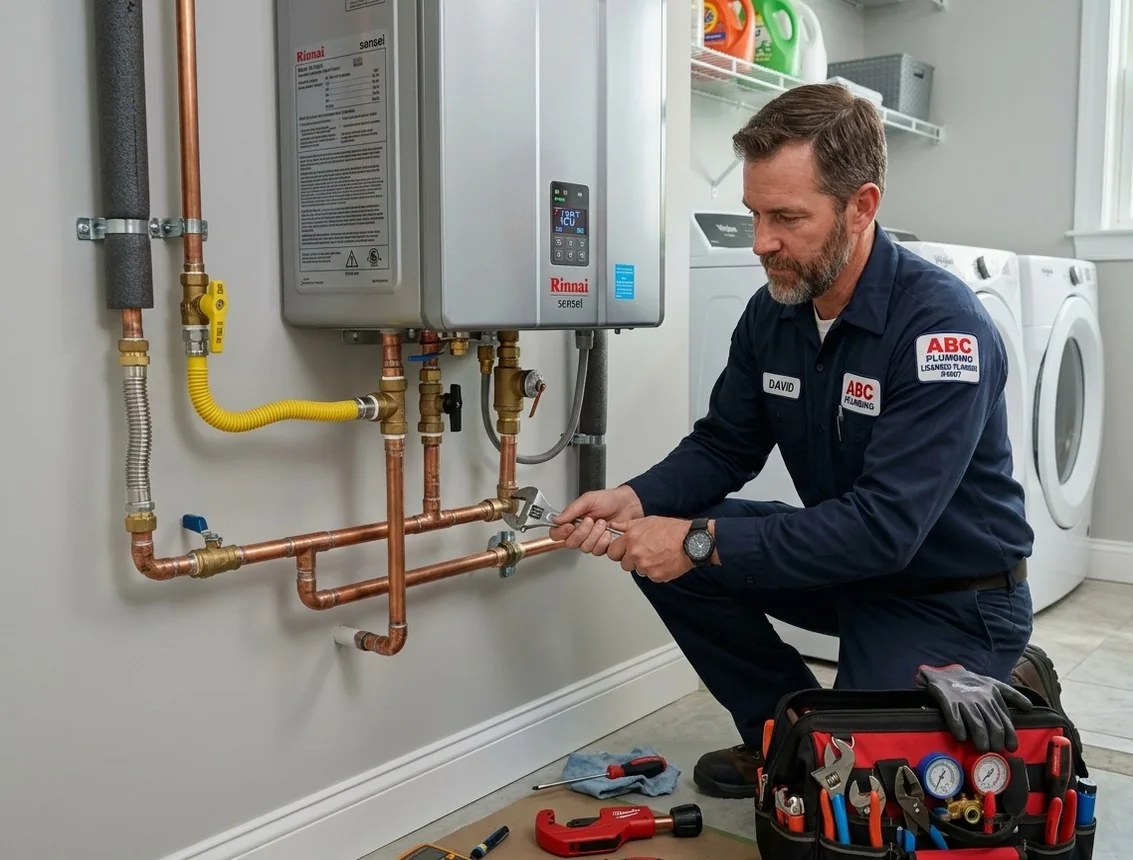
When hot water flow is detected, the control board sends high voltage to the spark igniter to light the gas burner. The flame sensor rod then sits directly in the burner flame, measuring a micro-amp electrical current (flame rectification) to confirm ignition safety.
Gas tankless units use sophisticated electronic ignition systems rather than standing pilot lights. When a fixture opens, a combustion fan purges the chamber, gas valves open, and spark igniters generate an electrical arc to ignite the gas air mixture.
If the flame sensor rod becomes coated with carbon deposits or mineral oxide, it cannot detect the flame. The control board assumes combustion failed and shuts off gas flow to prevent unburned gas accumulation.
Carbon and mineral buildup on the metal rod insulates it from sensing current.
Corroded or misaligned spark gaps fail to create a strong electric arc.
Insufficient inlet gas pressure prevents proper air-to-fuel ignition mixtures.
Failed high-voltage ignition modules fail to supply current to igniter electrodes.
Cleaning carbon buildup from the flame sensor rod with fine steel wool restores electrical signal conduction.
Adjusting electrode gap distance ensures a hot spark directly in the gas path.
Verifying gas solenoid valve coil resistance ensures gas opens during ignition sequence.
Ensuring proper intake fan speed delivers correct air-fuel ratios for smooth ignition.
Remove burner cover plate to access ceramic igniter mounts and flame sensor rods.
Gently polish metal sensing rods to remove non-conductive oxidation crust.
Inspect wire leads for cracks and verify gap distance meets manufacturer specs.
Reassemble chamber, restore power, and verify stable flame signal micro-amp readings.
Tankless systems from major manufacturers can differ in components, diagnostics, maintenance procedures, and error-code definitions. Service resources cover major brands found in service areas across the country.
Explore more tankless water heater services from TanklessFixer across specialized system categories.
Explore resources, causes, and options for tankless water heater gas valve & burner repair.
Learn More →Explore resources, causes, and options for gas tankless water heater repair.
Learn More →Explore resources, causes, and options for tankless water heater error codes.
Learn More →Explore resources, causes, and options for tankless water heater no hot water.
Learn More →This is a classic symptom of a dirty or faulty flame sensor. The unit ignites, but because the sensor fails to detect the flame, the gas valve closes for safety.
Yes, technicians clean flame sensor rods by gently rubbing them with fine steel wool or emery cloth to clear carbon buildup.
Igniter failure can be caused by cracked ceramic insulation, worn metal tips, loose wiring leads, or a failed high-voltage ignition transformer.
On most major gas tankless brands, Code 11 indicates ignition failure and Code 12 indicates flame loss during operation.
Igniter electrodes and flame sensors should be inspected and cleaned during annual preventative maintenance.
TanklessFixer organizes tankless water heater services by state and city so homeowners can quickly find local repair, maintenance, installation, and replacement information. Search or select a state below to find local city coverage.
Connect with local service resources for repair, troubleshooting, maintenance, installation, and replacement across state and city service areas.
Call (833) 643-1120