Excessive Water Supply Pressure
Incoming municipal water pressure exceeding 80 PSI forces safety valves open.
Pressure Relief Valve Service
The pressure relief valve (PRV) is a critical safety device designed to discharge water automatically if internal system pressure exceeds safe operational limits.
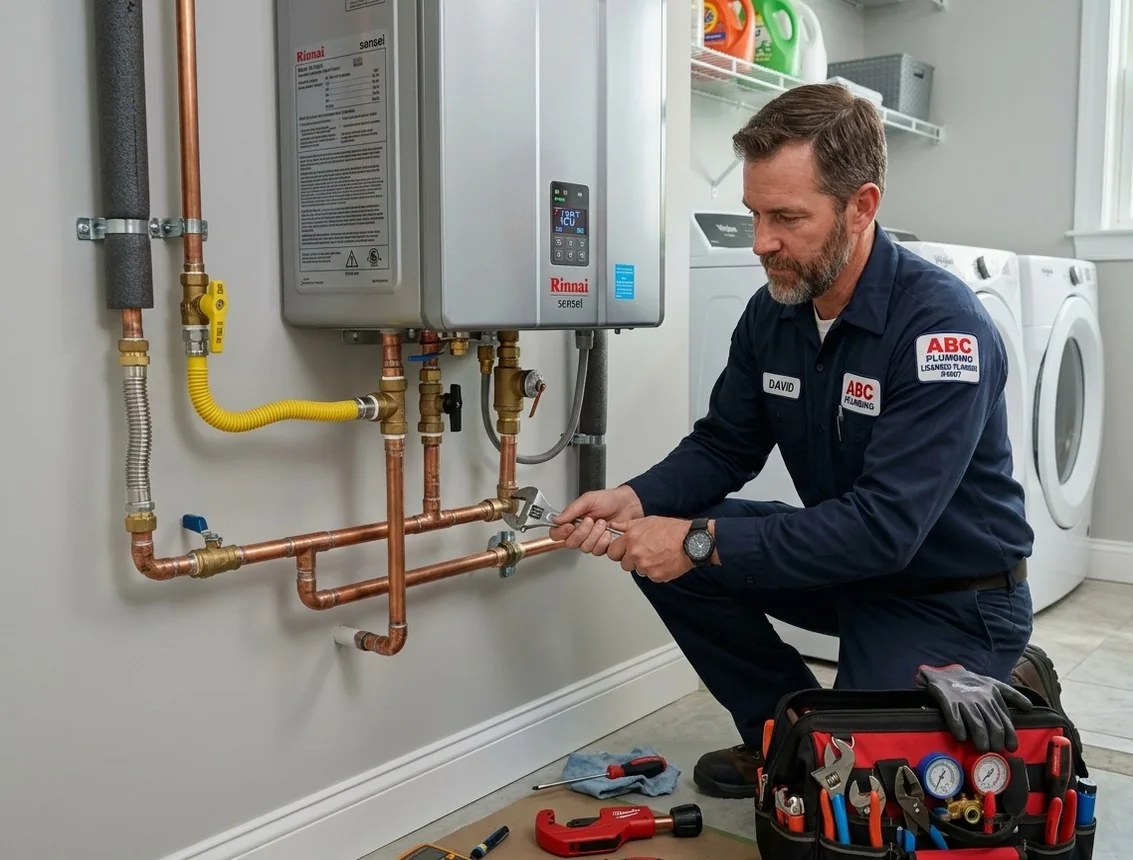
A tankless pressure relief valve drips or discharges water when household municipal water pressure exceeds the valve's rating (typically 150 PSI), when thermal water expansion occurs in closed plumbing systems without an expansion tank, or when mineral scale prevents the valve's internal rubber seat from sealing properly.
Every tankless water heater installation requires a safety pressure relief valve rated for up to 150 PSI and 200,000 BTUs. The valve features a spring-loaded seat designed to pop open if water pressure rises dangerously.
If the valve drips constantly or opens during heating cycles, it indicates high incoming municipal water pressure, thermal expansion pressure spikes, or scale debris lodged in the valve seat.
Incoming municipal water pressure exceeding 80 PSI forces safety valves open.
Water expanding as it heats in closed plumbing systems creates high pressure spikes.
Mineral scale particles trapped in the valve seat prevent watertight closure.
Internal spring tension weakening over time, causing premature valve opening.
Spring-loaded safety valves calibrated to open automatically before system pressure damages heat exchangers.
Installing expansion tanks absorbs pressure spikes caused by heating water in closed plumbing networks.
Installing PRVs on main supply lines keeps household water pressure at a safe 50-65 PSI.
Routing rigid copper discharge lines downward to within 6 inches of floor drain for safe discharge.
Attach a water pressure gauge to a hose bibb to check static household water pressure.
Briefly lift the PRV manual test lever to flush water and clear potential scale seat debris.
If dripping continues, shut off water supply, drain pressure, and unscrew faulty PRV valve.
Thread a new ASME-rated 150 PSI pressure relief valve into the isolation valve port using Teflon tape.
Tankless systems from major manufacturers can differ in components, diagnostics, maintenance procedures, and error-code definitions. Service resources cover major brands found in service areas across the country.
Explore more tankless water heater services from TanklessFixer across specialized system categories.
Explore resources, causes, and options for tankless water heater leak repair.
Learn More →Explore resources, causes, and options for tankless water heater maintenance.
Learn More →Explore resources, causes, and options for tankless water heater installation.
Learn More →Explore resources, causes, and options for tankless water heater heat exchanger repair.
Learn More →A dripping PRV is primarily a safety warning that system pressure is too high or the valve is failing. It should be inspected promptly.
NEVER cap or plug a pressure relief valve. Doing so defeats a primary safety device and can cause catastrophic heat exchanger rupture.
Ideal household water pressure is between 50 and 70 PSI. Pressure exceeding 80 PSI requires installing a pressure reducing valve.
First try lifting the test lever briefly to flush scale from the seat. If dripping persists, test home water pressure and replace the relief valve.
When backflow preventers or check valves are present, water expanding during heating cannot flow back into city mains, creating pressure spikes.
TanklessFixer organizes tankless water heater services by state and city so homeowners can quickly find local repair, maintenance, installation, and replacement information. Search or select a state below to find local city coverage.
Connect with local service resources for repair, troubleshooting, maintenance, installation, and replacement across state and city service areas.
Call (833) 643-1120