Heat Exchanger Integrity
Cracked or ruptured heat exchangers are usually cost-prohibitive to repair compared to installing a new system.
Tankless Replacement
When an on-demand water heater reaches the end of its useful lifespan or suffers major component failure, replacement restores reliable hot water delivery and energy efficiency.
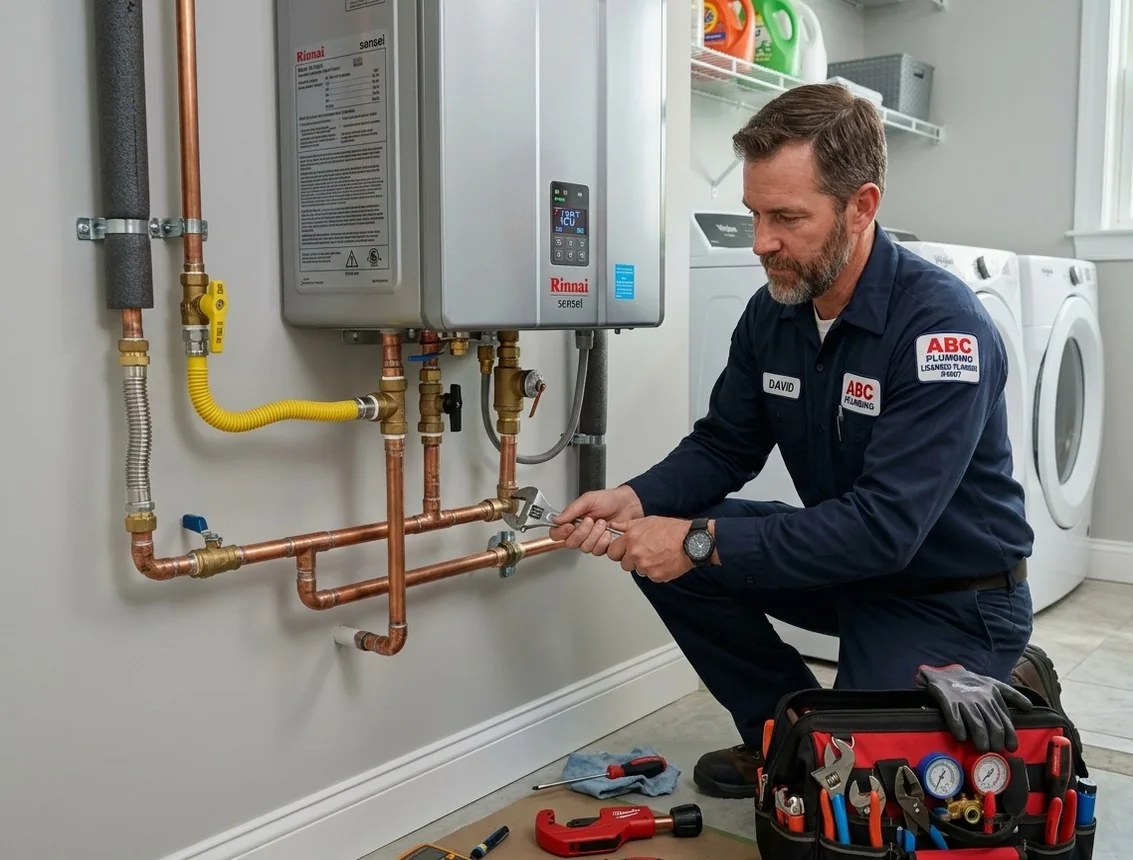
A tankless water heater should typically be replaced when it experiences severe heat exchanger cracking, persistent electrical or gas control board failures, severe scale corrosion, or when repair costs approach a significant portion of a new unit's cost.
Tankless water heaters offer impressive durability, but aging components eventually suffer thermal fatigue, mineral corrosion, or electrical breakdown. Replacing an older unit with a modern, high-efficiency gas or electric tankless system improves fuel performance and eliminates recurring repair bills.
During a system replacement, qualified plumbing technicians evaluate existing gas line sizing, electrical service panels, water supply isolation valves, and venting configurations to ensure seamless integration with modern equipment.
Cracked or ruptured heat exchangers are usually cost-prohibitive to repair compared to installing a new system.
Units past their expected operational lifespan suffer compound failures across sensors, valves, and electronics.
Home additions or larger households may require upgrading to a higher-capacity GPM unit.
Transitioning from non-condensing to condensing gas units delivers higher energy savings.
Ruptured heat exchanger copper tubes or stainless steel channels make complete unit replacement the most practical long-term decision.
Repeated electrical short circuits or fried main circuit boards on aging models warrant upgrading to modern digital controls.
Extensive internal water leaks that ruin wiring harnesses, blowers, and sensors make replacement necessary.
Upgrading older low-GPM units ensures ample simultaneous hot water for multiple showers and appliances.
Technicians evaluate water flow demand, fuel lines, venting, and electrical capacity.
Gas, water, and power supplies are safely isolated and disconnected from the old unit.
The new tankless system is wall-mounted, aligned with plumbing isolation valves, and connected.
Gas pressure, exhaust venting, flow activation, and temperature output are fully calibrated.
Tankless systems from major manufacturers can differ in components, diagnostics, maintenance procedures, and error-code definitions. Service resources cover major brands found in service areas across the country.
Explore more tankless water heater services from TanklessFixer across specialized system categories.
Explore resources, causes, and options for tankless water heater installation.
Learn More →Explore resources, causes, and options for tankless water heater maintenance.
Learn More →Explore resources, causes, and options for tankless water heater heat exchanger repair.
Learn More →Explore resources, causes, and options for gas tankless water heater repair.
Learn More →Explore resources, causes, and options for electric tankless water heater repair.
Learn More →Most straightforward tankless replacements can be completed in 4 to 8 hours, depending on whether gas line or venting modifications are required.
Yes, but upgrading to a higher GPM unit may require verifying that gas supply pipe diameter or electrical panel amperage is sufficient.
If the unit requires major components like a heat exchanger or gas valve, replacement is generally recommended due to component wear.
Condensing tankless units require PVC, CPVC, or polypropylene venting, whereas non-condensing units require Category III stainless steel.
Professional replacement includes unmounting the old unit, installing isolation valves, connecting water/gas/vent lines, testing safety controls, and calibrating temperature.
TanklessFixer organizes tankless water heater services by state and city so homeowners can quickly find local repair, maintenance, installation, and replacement information. Search or select a state below to find local city coverage.
Connect with local service resources for repair, troubleshooting, maintenance, installation, and replacement across state and city service areas.
Call (833) 643-1120